What Are Rocking Bouncers? Complete Parent Guide
By Sofia Alvarez • 4th Nov
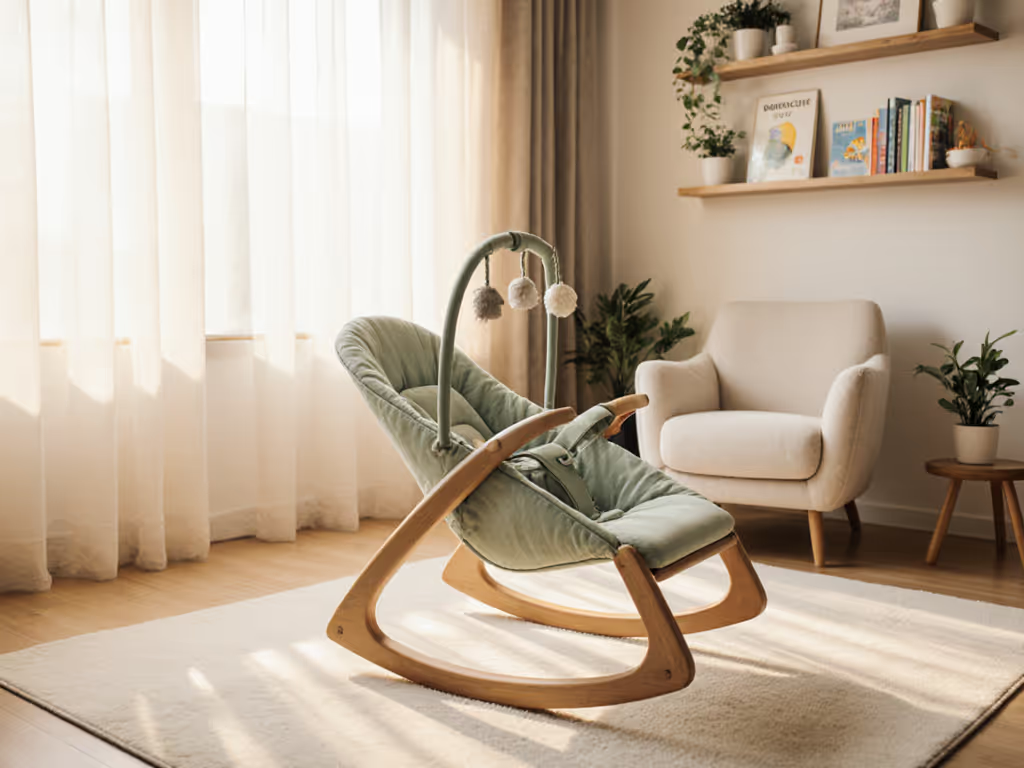
Did you know that babies spend around 16 hours a day sleeping or resting in their early months? Choosing the right support is crucial for their comfort and development during this important time. Rocking bouncers stand out as a favorite among parents because they combine gentle motion with secure seating. Learn how these supportive seats can create a soothing environment and give caregivers a bit more flexibility in their daily routines.
Key Takeaways
| Point | Details |
|---|---|
| Rocking Bouncers Support Development | These infant seats provide comfort and soothing motions that aid in motor skill development during early stages. |
| Variety of Types Available | Options include manual, battery-operated, and hybrid models, each offering distinct features and conveniences for parents. |
| Safety is Crucial | Adhering to safety guidelines and using the bouncer appropriately is essential to prevent accidents during use. |
| Complement Caregiving | Rocking bouncers should be used as supplementary support, not a replacement for direct human interaction with infants. |
Rocking Bouncers Defined and Core Concepts
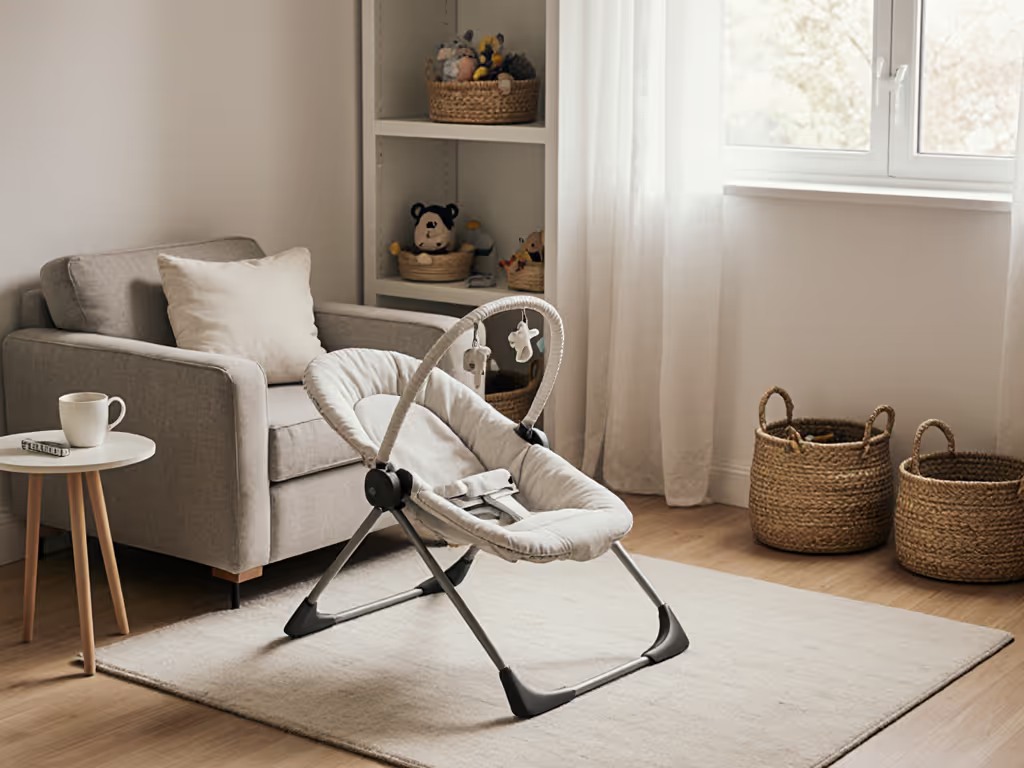
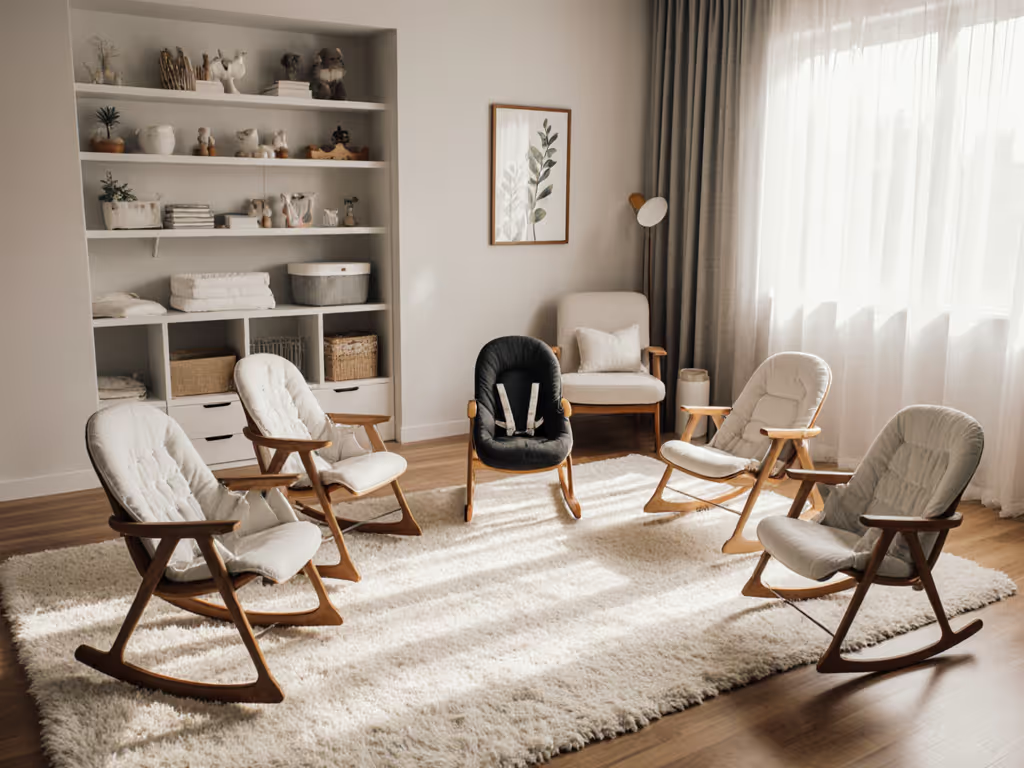
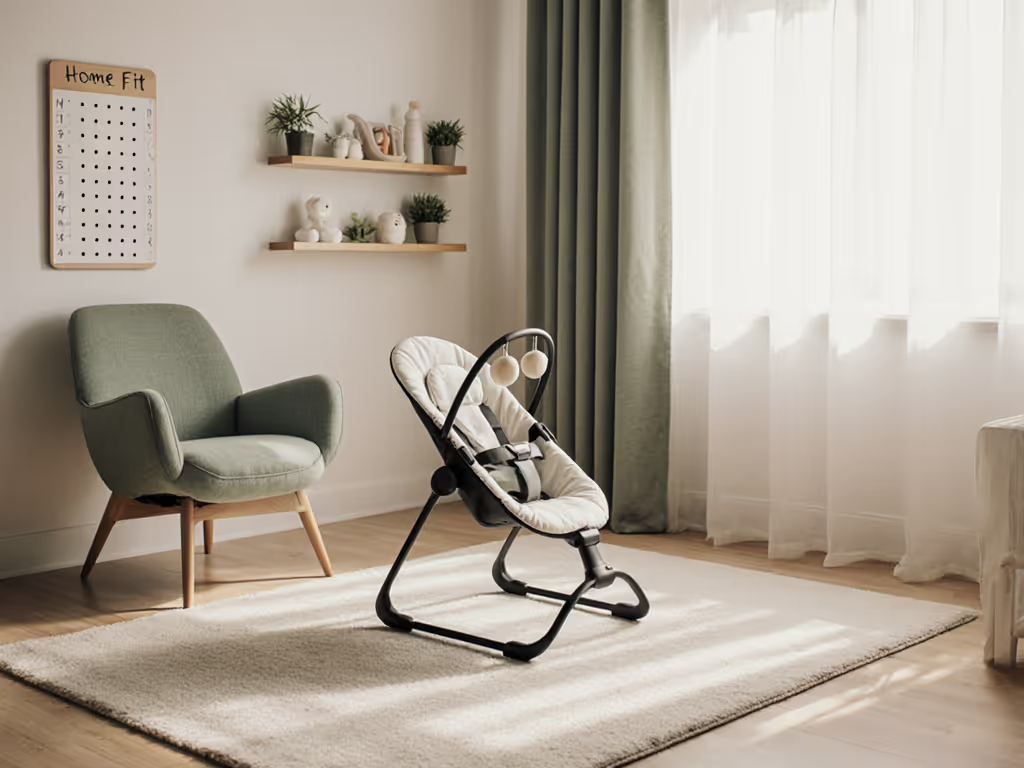
A rocking bouncer is a specialized infant seat designed to provide comfort, support, and gentle movement for babies during their early developmental stages. Unlike traditional stationary chairs, these innovative products combine a reclined seating position with rhythmic rocking or bouncing motions that can help soothe and entertain young infants.
At its core, a rocking bouncer serves multiple essential functions for parents and caregivers. Key design features typically include:
- A secure, reclined seating position that supports infants who cannot sit independently
- A flexible base that enables gentle rocking or bouncing movements
- Safety harnesses to keep babies securely positioned
- Compact and portable design for easy transportation between rooms
Most rocking bouncers are engineered for infants from birth to approximately six months old, a critical period when babies are developing motor skills and require significant support. The rhythmic motion mimics the comforting sensations babies experience in the womb, which can help calm fussy infants and potentially assist with sleep routines. Some advanced models incorporate additional soothing features like vibration modes, musical sounds, or hanging toy attachments to provide extra stimulation and entertainment.
Understanding the purpose and functionality of rocking bouncers is crucial for parents seeking safe, comfortable solutions for infant care. These versatile products offer a hands-free way to keep babies secure while allowing caregivers brief moments of mobility and flexibility during demanding early childcare stages.
Types of Rocking Bouncers Explained
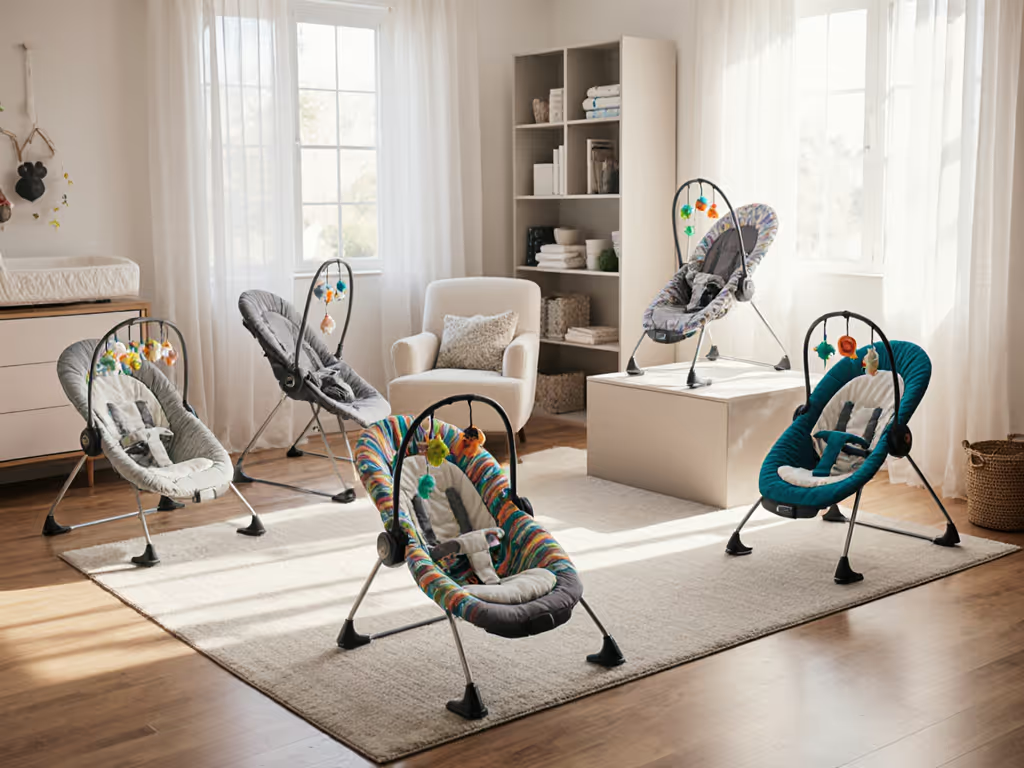
Rocking bouncers come in several distinctive variations, each designed to meet different parental needs and infant preferences. Electric bouncing chairs represent one of the most advanced categories, offering sophisticated features that go beyond traditional manual designs. These modern seats provide gentle automated motions that can significantly enhance infant comfort and caregiver convenience.
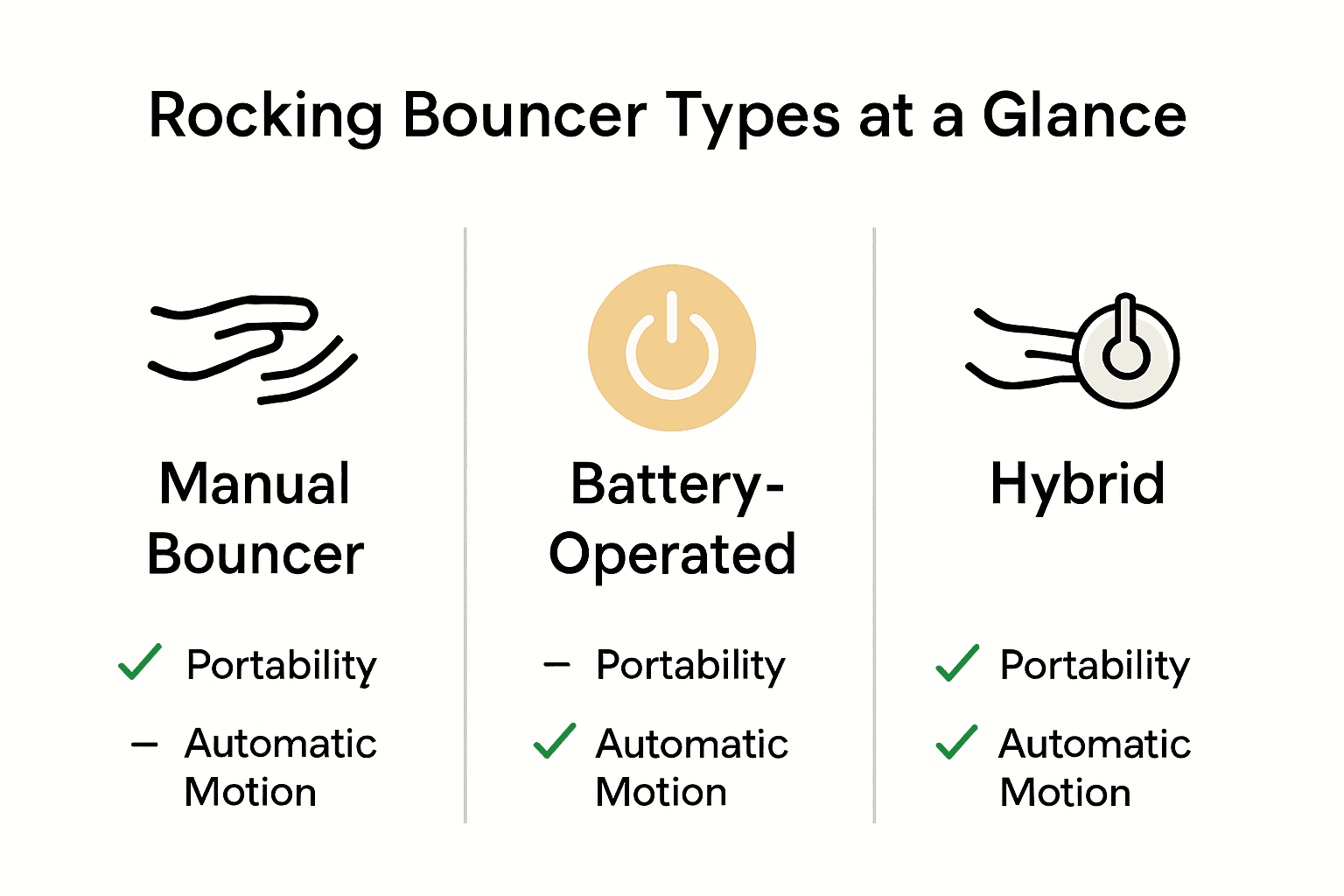
The primary categories of rocking bouncers can be classified into three main types:
Here's a comparison of the main types of rocking bouncers:
| Type of Bouncer | Power Source | Key Features | Typical Use Case |
|---|---|---|---|
| Manual Rocking Bouncer | None<br>Body movement | Lightweight<br>Simple design<br>Portable | Everyday use<br>Travel |
| Battery-Operated Bouncer | Batteries<br>Electric motor | Auto rocking<br>Vibrations<br>Music<br>Multiple speeds | Extended soothing<br>Hands-free |
| Hybrid/Convertible | Manual<br>Batteries | Multiple motion types<br>Convertible positions | Versatile needs<br>Growing babies |
- Manual Rocking Bouncers: Powered by natural body movement or gentle parental pushing
- Battery-Operated Bouncers: Featuring motorized rocking and vibration functions
- Hybrid/Convertible Bouncers: Combining multiple motion types and potential transformation capabilities
Battery-powered models offer the most technologically advanced experience. These electric bouncers typically include multiple features like adjustable swinging speeds, integrated vibration settings, and sometimes even musical or sound accompaniments. Some sophisticated 2-in-1 electric swing cradles merge multiple functionalities, allowing parents to transition seamlessly between different motion types and seating configurations.
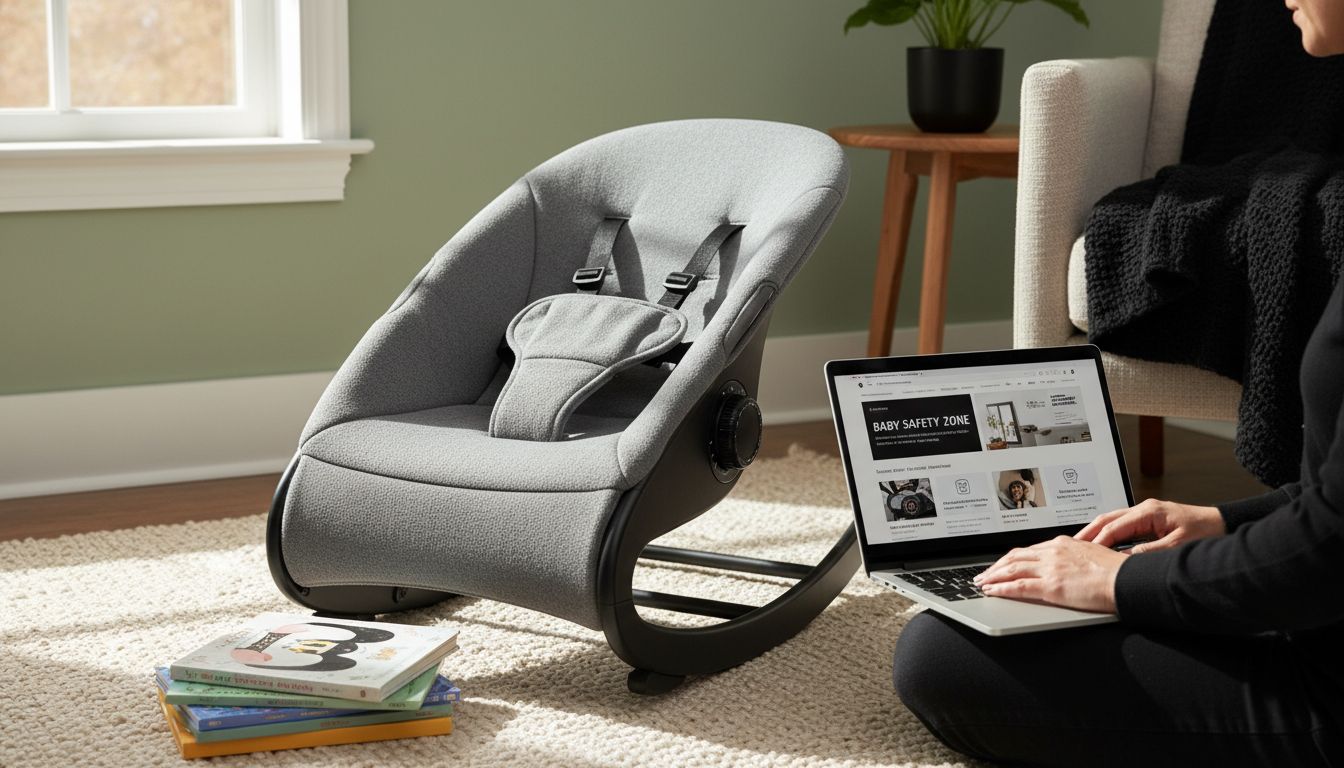
When selecting a rocking bouncer, parents should consider factors beyond motion type. Weight capacity, safety certifications, ease of cleaning, portability, and additional comfort features like padded surfaces or adjustable recline positions play crucial roles in determining the most suitable option for their specific infant care needs. Understanding these nuanced differences helps families make informed decisions that balance infant comfort with practical household requirements.
Key Features and How Rocking Bouncers Work
Rocking bouncers are sophisticated infant support systems designed to mimic natural soothing motions while providing a safe, comfortable environment for babies. Motion mechanics are the core feature that sets these devices apart from traditional infant seats, utilizing carefully engineered bases that allow controlled, rhythmic movement to calm and entertain infants.
The fundamental features of rocking bouncers typically include:
- Ergonomic Seating Design: Specialized contoured surfaces that support infant spine and neck development
- Motion Mechanisms: Flexible base structures enabling gentle rocking or bouncing movements
- Safety Restraint Systems: Multi-point harnesses that secure babies during motion
- Adjustable Positioning: Recline settings to accommodate different developmental stages
Technological innovations have transformed rocking bouncers into multifunctional infant care tools. Modern versions often integrate advanced features like adjustable swinging speeds, vibration settings that simulate parental touch, and even electronic sound or music functions. These technological enhancements aim to recreate the comforting sensations babies experience when being held, helping to soothe and potentially assist with sleep routines.
The underlying engineering of rocking bouncers focuses on creating controlled, gentle movements that provide sensory stimulation without overstimulating infants. Whether powered by manual pushing, battery operation, or the baby's own slight movements, these devices are carefully designed to maintain safety while offering a soothing, supportive environment that can help reduce infant stress and support early developmental needs.
Safety Standards and Usage Guidelines
Safety is paramount when it comes to infant care products, and rocking bouncers are no exception. The U.S. Consumer Product Safety Commission (CPSC) has developed comprehensive guidelines to ensure these devices provide a secure environment for infants during their most vulnerable developmental stages. These standards address critical aspects of design, construction, and recommended usage to minimize potential risks.
Key safety considerations for rocking bouncers include:
- Stable Base Design: Preventing tipping or unexpected movement during use
- Secure Harness Systems: Ensuring infants cannot slip or fall out of the seat
- Weight and Age Limitations: Strictly adhering to manufacturer-recommended guidelines
- Placement Restrictions: Avoiding use on elevated surfaces or unstable areas
- Regular Inspection: Checking for wear, damage, or structural compromises
Usage guidelines are critical for preventing potential accidents. Parents should never leave infants unattended in a rocking bouncer, even for short periods. The recommended maximum usage time is typically 15-30 minutes per session, with breaks to prevent prolonged positioning that could impact infant muscle development. Additionally, parents should discontinue use once the baby shows signs of being able to sit up, roll over, or attempts to climb out of the bouncer.
Beyond manufacturer recommendations, pediatric experts emphasize the importance of using rocking bouncers as a supplementary support tool, not a primary caregiving solution. These devices should complement, not replace, direct human interaction and physical contact. Always place the bouncer on a flat, stable surface away from hazards, and ensure the surrounding area is free from potential dangers like electrical cords, sharp edges, or other objects that could pose a risk to an infant's safety.
Comparing Rocking Bouncers to Alternatives
Parents navigating the world of infant support products face multiple options beyond rocking bouncers. Understanding the nuanced differences between various infant seating solutions can help families make informed decisions that best suit their specific needs and living environments. Each alternative offers unique benefits and limitations that impact comfort, mobility, and infant development.
Key alternatives to rocking bouncers include:
- Traditional Swings: Provide consistent motion but typically less portable
- Stationary Infant Seats: Offer stable support without movement
- Play Mats: Encourage floor-based interaction and developmental play
- Cribs and Bassinets: Designed for extended sleep periods
- Infant Carriers/Wraps: Provide direct body contact and maximum mobility
Motion-based alternatives like traditional baby swings share similarities with rocking bouncers but differ in fundamental design and functionality. Swings typically offer more consistent, mechanical movement compared to the more responsive bouncer design. They often have larger frames, making them less portable but potentially more stable for longer sitting periods. In contrast, rocking bouncers excel in compact design and adaptability, allowing for easier transportation between rooms and more intuitive movement that responds to the baby's natural motions.
Ultimately, the best infant support solution depends on individual family dynamics, living space, and specific infant needs. While rocking bouncers provide a versatile middle ground between stationary seats and full-motion swings, parents should consider factors like frequency of use, available space, budget, and their baby's unique comfort preferences when selecting the most appropriate infant support product.
Find the Perfect Rocking Bouncer for Your Baby's Comfort and Safety
Discovering the right rocking bouncer can feel overwhelming, especially when safety, gentle motion, and space efficiency are top priorities. This guide highlights the importance of features like ergonomic seating, secure harnesses, and soothing automatic movement that help calm your baby during their critical early months. If you want to avoid guesswork and feel confident about choosing a bouncer that supports your infant's development while fitting your home, expert insights are just a click away.
Explore detailed reviews and comparisons that focus on compact designs and user-friendly features at Bouncer Lab. Learn how to pick bouncers tailored to small spaces and busy schedules by visiting our landing page. With easy-to-understand guidance that covers safety, cleaning, and convenience, you can find the bouncer that matches your family's unique needs today. Don't wait to provide your baby with the soothing support they deserve. Start your search now at Bouncer Lab and make an informed choice with confidence.
Frequently Asked Questions
What is a rocking bouncer?
A rocking bouncer is an infant seat designed to offer comfort and support for babies while providing gentle rocking or bouncing motions to soothe and entertain them during their early developmental stages.
What are the different types of rocking bouncers available?
Rocking bouncers generally come in three types: manual rocking bouncers, battery-operated bouncers, and hybrid/convertible bouncers, each with varying levels of motion and functionality to cater to different parental needs.
What safety features should I look for in a rocking bouncer?
Key safety features include a stable base design to prevent tipping, secure harness systems to keep infants safe, adherence to weight and age limitations, and regular inspection for wear and structural integrity.
How long can my baby stay in a rocking bouncer?
It is generally recommended that infants use a rocking bouncer for no more than 15-30 minutes per session, with breaks to prevent prolonged positioning. Use should cease once the baby can sit up, roll over, or attempt to climb out of the bouncer.
Related Articles