Outdoor Baby Bouncer Comparison: Sand & Stability
By Jonas Lee • 6th May
Introduction
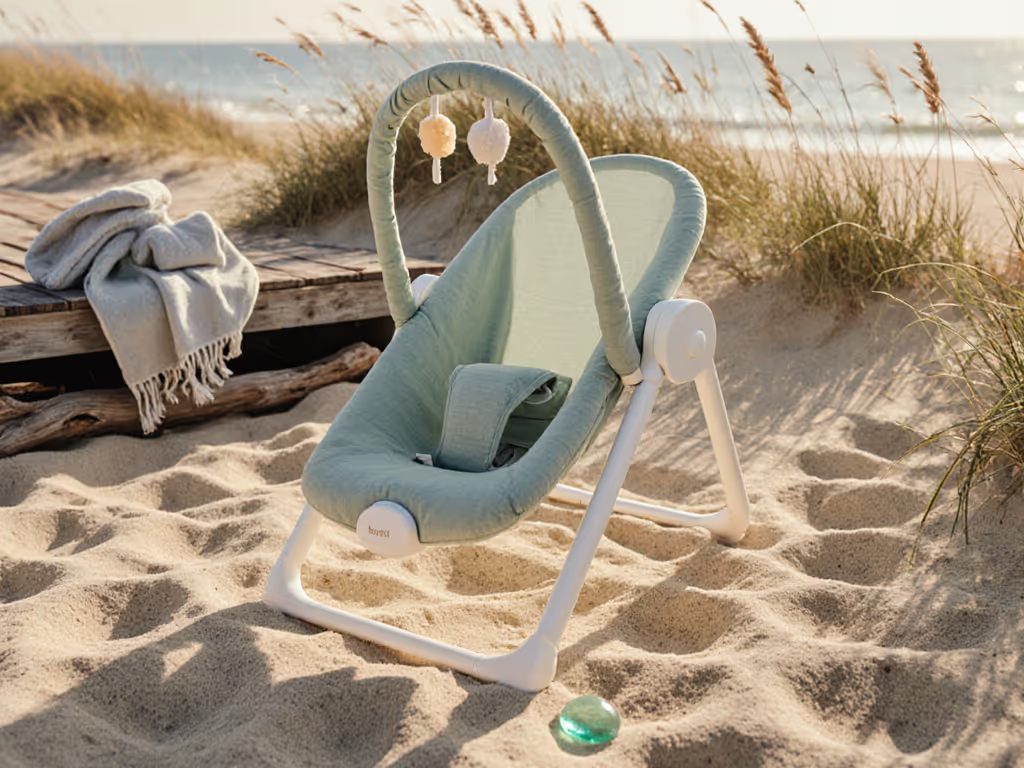
For apartment-dwelling and small-space parents, "outdoor" often translates to a weekend patio, a borrowed beach house, or grandparent's backyard, not a home garden. When you venture to these spaces with an infant or young toddler, you need an outdoor baby bouncer comparison that speaks to real constraints: sand finds every crevice, salt spray corrodes, and uneven ground tests stability. The stakes differ sharply from indoor bouncers. Outdoor models must hold their structure on grass and gravel, withstand moisture and sun, and survive the inevitable sand cleanup that sends indoor-only gear back to its box forever.
This guide uses lifecycle calculus to evaluate outdoor bouncers (cost-per-month, cleanability, resale odds) so you choose gear that doesn't pile up after one season. Quiet beats clever: simple, proven materials outlast gadgets and gimmicks, and they resell faster too.
1. Sand-Resistant Frame Materials: Metal vs. Hardened Polymer
The frame is your first defense against sand corrosion and structural fatigue. Stainless steel frames resist rust and salt spray, a fact confirmed by outdoor furniture longevity studies. Hardened polypropylene or reinforced polymer bases offer lighter weight and salt tolerance, though they can degrade under prolonged UV exposure without UV-stabilized compounds.
What to track:
- Exposed metal vs. sealed/powder-coated joints
- UV-stabilized plastic (check product specs; reputable makers disclose this)
- Frame weight (essential for compact storage and single-handed carrying on stairs)
Light stainless-steel frames sit in a practical sweet spot: they resist corrosion, remain compact when folded, and hold resale value. Heavier models are more stable on sand but sacrifice portability, a trade-off worth mapping against your actual use case (day-trip backyard vs. multi-week beach rental).
2. Weatherproof Infant Seating: Mesh vs. Fabric Blends
Weatherproof infant seating determines both safety and cleanup effort. Mesh seats drain water and sand quickly, dry in minutes, and resist mold when properly stored. However, very open mesh can feel thin in cold weather, and newborns in early weeks may prefer slightly more support.
Fabric-and-mesh blends (polyester backing with mesh panels) offer newborn comfort and quick drying but trap sand in seams. Fully machine-washable fabrics eliminate guesswork: grab the cover, toss it in the washer, and have it back within an hour, but they weigh more wet and take longer to dry completely.
Practical test:
- Pour sand lightly onto the seat and tip the bouncer. How quickly does it shed?
- Check if covers zip off or require disassembly.
- Ask the manufacturer: machine washable at what temperature? Shrinkage risk?
Seats that shed sand and dry in under 10 minutes keep lifecycle costs low because cleanup doesn't consume mental energy or stretch into evening chores.
3. Beach-Friendly Bouncer Stability: Center of Gravity & Base Width
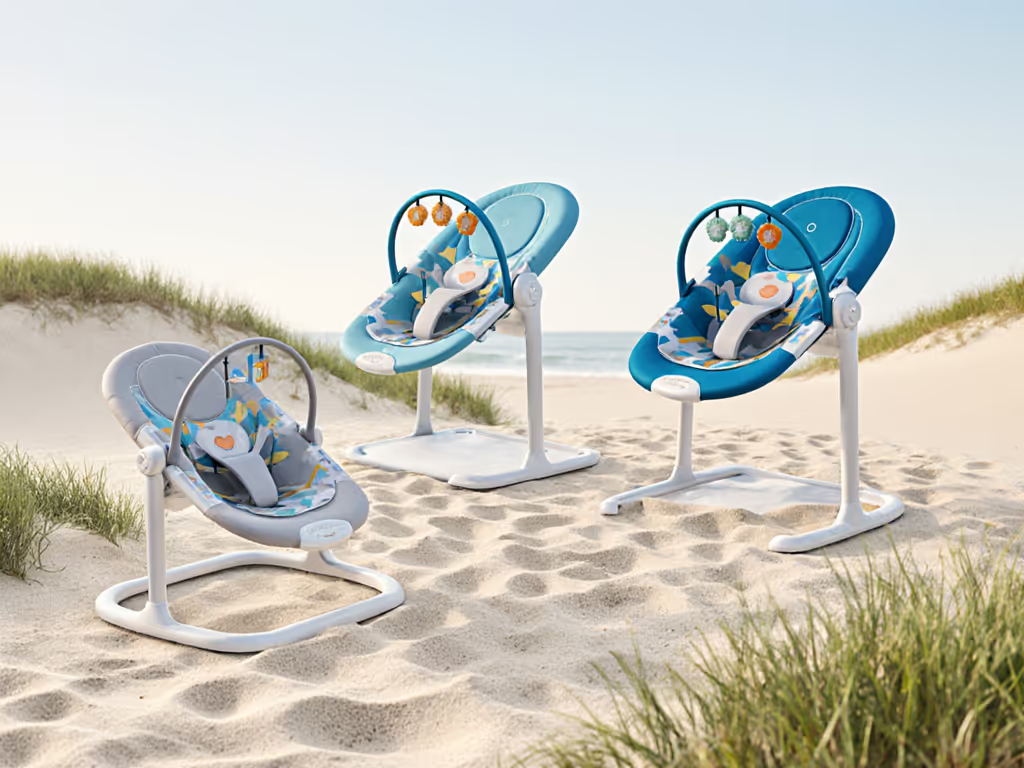
A beach-friendly bouncer must resist tipping on soft, uneven surfaces. Wider, lower bases outperform tall, narrow frames; this principle applies equally to sand and wet grass. Stability equations matter: test a candidate bouncer on carpet or a couch (mimicking surface give) and watch for wobble when you press the fabric at seat-level force.
Non-slip feet (rubber or textured pads) prevent downslope sliding on wet sand. Feet that are smooth plastic on wet surfaces are a hidden liability, they migrate, and the bouncer drifts toward the water line or sun.
Field test before committing:
- Rock the empty bouncer side-to-side; it should feel planted, not springy.
- Check foot contact: all four feet should touch ground; raised corners signal instability.
- Examine the leg-base angle; shallow angles (legs fanned out) beat steep, narrow geometries for outdoor use.
Models rated for older babies or heavier toddlers typically have broader, more stable bases, a metric worth cross-checking even if your child is younger.
4. Best Portable Bouncer: Weight, Fold Compactness & Carry Handles
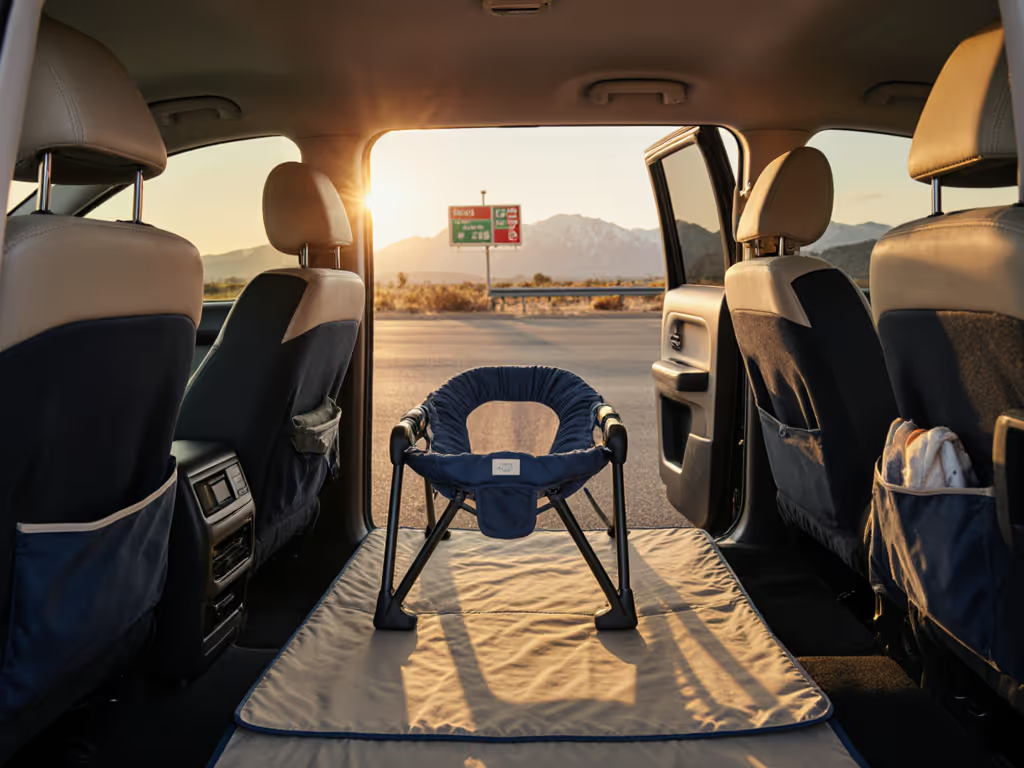
The best portable bouncer for small-space families folds to under 20 inches in width and weighs under 6 pounds when empty, so you can carry it one-handed up a flight of stairs or through an airport. For specific model recommendations that stay light and fold-flat, see our compact travel-ready bouncers. Integrated carry handles that keep straps tucked (not dangling) prevent sand from coating them between uses.
Lightweight doesn't mean flimsy. Tension in the fabric and frame should feel taut when you press; slack seats bounce inconsistently and feel unsafe. A bouncer that folds in one motion (no disassembly required) cuts friction; bouncers that require leg removal get abandoned because setup is tedious.
Compact storage notes:
- Measure the bouncer folded: depth, width, height.
- Attempt one-handed carry with a lightweight object (a 2-pound bag of flour simulates realistic transport).
- If you can't grab it and navigate stairs or a doorframe, it won't travel.
Second-time parents often report that ultraportable bouncers (6-8 pounds, under-20-inch fold) get used twice as long outdoors because moving them room-to-room or into a car feels frictionless.
5. Quick-Dry Textiles & Stain Resistance: Cleaning Burden
Sand and salt accumulate fastest on textiles; a seawater spray on a dark fabric creates visible salt stains within hours. Weatherproof infant seating that resists staining buys you time before washing becomes urgent.
Solution-dyed polyester resists staining better than surface-dyed fabrics. Microfiber textiles wick moisture but trap fine sand; mesh lets it fall through. If you're torn between two bouncers, the one with removable, machine-washable covers wins every time (even if the frame is slightly heavier) because cleanup is a burden that compounds over a season.
Drying time matters: a cover that takes 8 hours to air-dry means either buying a second cover or waiting overnight. For step-by-step care that keeps salt and sand from degrading fabrics, use our baby bouncer cleaning guide. Covers that dry in 2-4 hours (typical for mesh or thin microfiber) fit small-space reality: one wash cycle, and you're ready to go again.
Lifecycle calculus says: choose textiles that dry fast and cover removal that takes under two minutes, or you'll stop using the bouncer outdoors halfway through the season.
6. Sand-Resistant Bouncer Design: Crevice Count & Zippers
Sand loves crevices. Bouncers with seams, zippered pockets, or exposed frame joints become sand depositories that cost hours to excavate. Compare candidate models for:
- Flush seams (stitched but not recessed) vs. recessed seams
- Removable padding or covers that hide sand traps
- Exposed springs or tension cables (sand will corrode them; avoid these for outdoor use)
- Zippered covers: easier to remove but harder to seal; consider a model with a simple cover tuck rather than zips if sand resistance is your priority
A frame with zero zippered storage pockets and simple stitch work cleans faster and resells better because subsequent owners aren't inheriting a sand-filled artifact.
7. Warranty, Replacement Parts & Resale: Lifecycle & Long-Term Value
An outdoor bouncer lives a harder life than an indoor one; UV, salt, and sand degrade materials faster. Check the warranty: legitimate makers offer 1-2 years of coverage, with clear terms on what fails first (fabric seams, stitching, frame welds). For brand-by-brand analysis of warranty policies and real support responsiveness, see our bouncer brand trust report. A 2-year warranty signals confidence; 30-day coverage suggests the maker expects rapid wear.
Critical resale factor: Are replacement covers available? If the manufacturer discontinues or obscures part numbers, the bouncer becomes landfill once the cover wears. Brands that publish replacement cover prices and stock them for 5+ years win in the resale market. A $150 bouncer with a $40 replacement cover (widely available) is a better long-term buy than a $120 bouncer with orphaned parts.
Frictionless sentences: Track these as you compare.
- Warranty length and what it covers
- Average replacement cover cost (divide by typical lifespan to estimate true annual cost)
- How many reviews mention resale success
- Brand responsiveness to out-of-warranty defect reports
Second-hand outdoor bouncers usually price 40-60% below retail if the frame is intact and covers are included. If a bouncer hasn't resold within a month at 50% of retail, the market is signaling durability or style concerns; steer around it.
Actionable Next Step: Assemble Your Comparison Matrix
Start with this framework to narrow your search:
- List three candidate models based on your budget (new or secondhand).
- Measure each when folded: footprint, weight, and single-handed carry feel.
- Test sand shedding: simulate outdoor use by pouring sand onto the seat and tilting.
- Check cover removal: time yourself removing and reinstalling the cover; aim for under two minutes.
- Verify warranty and part availability: email the maker or search for replacement covers online.
- Price the total cost of ownership: initial cost plus one replacement cover, divided by expected years of use (typically 3-5 for bouncers).
- Search secondhand markets (Facebook Marketplace, OfferUp, Craigslist): note asking prices and how long listings stay active; quick sales signal desirability.
Buy once, use daily, resell easily, quiet and clean. An outdoor bouncer that passes this matrix will serve your small space well, travel cleanly, and exit your life when you're ready.