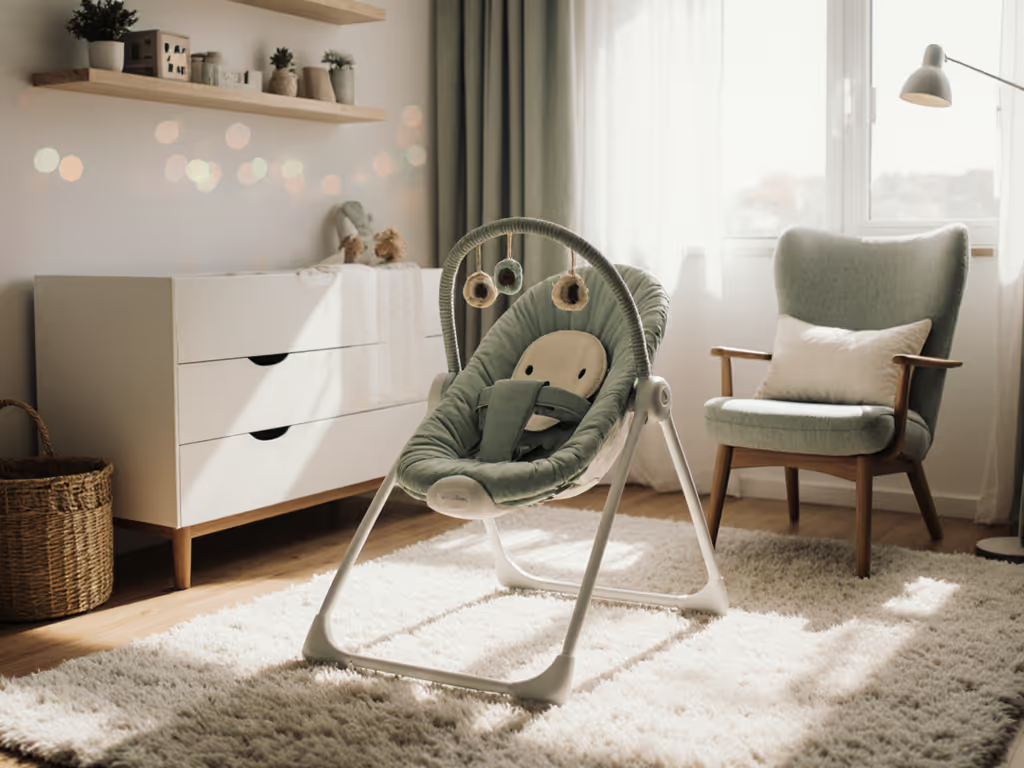
Hip-Healthy Bouncer Comparison: IHDI-Approved Models Tested
By Priya Menon • 3rd Feb
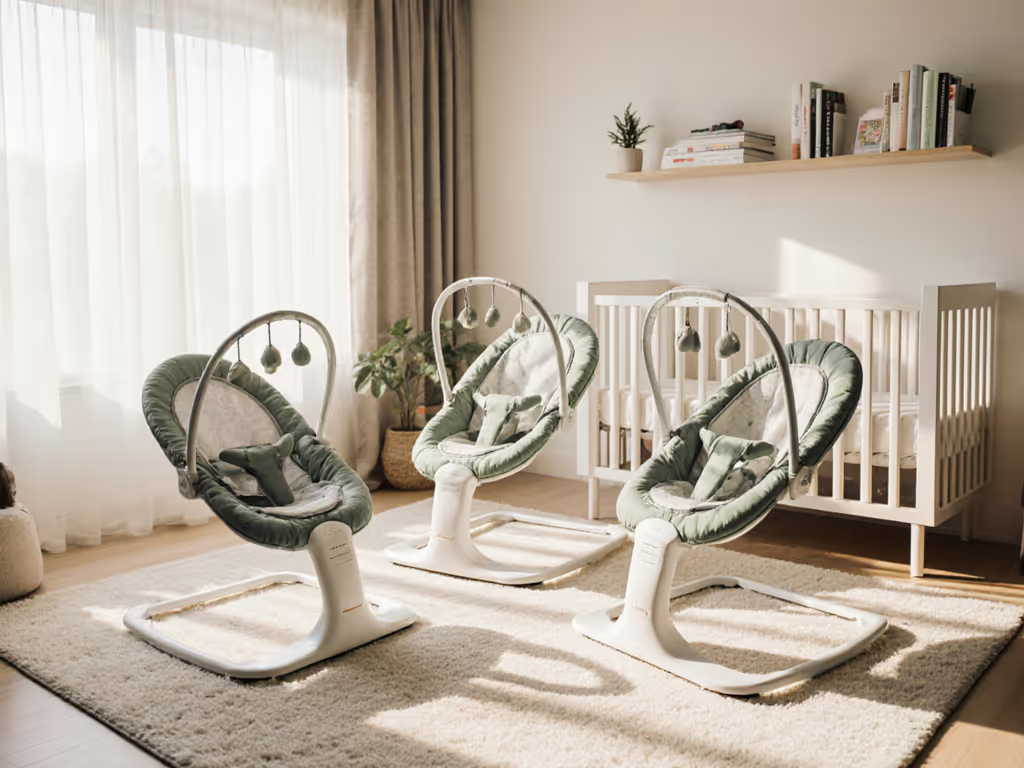
When your living space feels like a Tetris board of baby gear, choosing a bouncer that supports hip development without dominating your apartment becomes a non-negotiable priority. As parents of newborns navigate cramped quarters and exhausting routines, a hip-healthy bouncer comparison becomes essential, not just for developmental peace of mind, but for practical daily survival. I've reviewed current models through the lens of International Hip Dysplasia Institute (IHDI) guidance and real-world caregiver constraints, focusing on what actually matters when your ceiling height is low and your mental bandwidth is lower. If portability and storage are top concerns, see our compact, travel-ready bouncer picks.
Why does hip positioning matter in infant bouncers?
Newborn hips develop through natural movement, not static positioning. The hip joint forms optimally when babies can move freely with hips bent and spread, a position often called "M-position" or "frog-leg" stance. When I worked with a parent who'd been letting their infant nap in a bouncer just to steal quiet moments, we didn't focus on product features but on practicing safe transitions. We timed movement to a flat sleep surface after 20 minutes of supervised bouncer use, turning safety into doable habits rather than fear-based restrictions. This is where the phrase 'safety scales with habit' becomes tangible: small, consistent actions build confidence where rigid rules create anxiety.
Safety lives in routines, not marketing claims or modes.
What does 'hip-healthy' actually mean for bouncers?
Contrary to marketing claims, hip-healthy isn't a special feature, it's about unrestricted movement. As Dr. Pablo Castañeda, Director of IHDI, states: 'There is no evidence that a single carrier or single position for a limited amount of time causes hip dysplasia.' Hip health depends on allowing natural leg motion without forcing hips together. Orthopedic infant seating avoids rigid structures that lock hips in straight positions. Instead, supportive bouncers let legs fall outward comfortably while maintaining gentle support at the thigh (not just the knee), which distributes pressure appropriately across developing joints.
Which bouncer positions should I avoid to protect hip development?
Avoid any position where:
- Legs are straightened with feet dangling (common in narrow-based designs)
- Hips are squeezed tightly together by rigid inserts
- Baby's weight rests primarily on pelvic bones rather than full thighs
The IHDI confirms that 'products allowing unrestricted motion do not cause hip dysplasia,' but warns that prolonged periods in restrictive positions may interfere with natural development. This is particularly relevant for parents in small spaces who might leave baby in a bouncer longer while managing household tasks. Set phone timers, not just for baby's benefit, but to build your own awareness of usage patterns.
Are bouncers safe for babies with hip concerns or family history?
For infants with diagnosed hip dysplasia or strong family history, consult your pediatric orthopedist for specific guidance. However, IHDI's position remains clear: 'Normal infant hip development relies on continuous coupled motion between the growing components in a typical position.' Most bouncers marketed as developmentally supportive options accommodate this need when used appropriately. Look for models with:
- Wide, U-shaped seats (not narrow V-shaped)
- Adjustable leg openings to accommodate natural hip spread
- No rigid barriers forcing legs together
Parents in compact living situations often worry about storage versus necessity, knowing your bouncer meets these basic hip-healthy criteria reduces the anxiety of 'should I keep this taking up space?'
How long can my baby safely stay in a hip-healthy bouncer?
The IHDI emphasizes that 'periodic short-term use of a baby carrier unlikely to have any effect on hip development.' Applied to bouncers, this translates to:
- Newborns (0-3 months): 15-20 minute intervals with frequent position changes
- Infants (4-6 months): 20-30 minute intervals with movement breaks
- Older babies (6+ months): Follow manufacturer's age/weight limits
City-dwelling parents often tell me they need those precious 15-minute stretches to shower or prepare meals, just be intentional. Set a timer visible in your space (not just on your phone), and move baby to floor time or a flat surface when it rings. Your routine protects more than hip development, it builds predictable rhythms in chaotic seasons. For pediatrician-backed age and duration guidelines, see our developmental timeline guide.
What features should I look for to ensure a bouncer supports hip development?
When evaluating a developmentally supportive bouncer within tight urban constraints:
- Seat shape: U-shaped or rounded design allowing natural hip spread (M-position)
- Thigh support: Full support extending to knee joint, not just under thighs
- Adjustability: Recline settings that maintain hip bend without forcing legs together
- Stability: Low center of gravity for small-space safety (no top-heavy designs)
- Cleanability: Fully removable cover for frequent washing in pet-friendly or multi-child homes; see our bouncer cleaning guide for maintenance tips.
Smaller apartments demand multi-functional gear, prioritize bouncers that fold flat or store vertically. Your space limitations shouldn't compromise developmental needs; they should guide smarter selections.
Do I need a special 'orthopedic' bouncer for my newborn?
If your pediatrician hasn't diagnosed specific hip concerns, the answer is generally no. Most major brands now design with hip health in mind, particularly those acknowledged by IHDI. The critical factor isn't specialized labeling but how the bouncer accommodates natural positioning. BabyBjörn's bouncers, for example, are acknowledged by IHDI as 'hip-healthy products' that 'do not restrict the hips or place them in unhealthy positions.' What matters more than the label is whether your baby's hips can assume that natural M-position with thighs supported and knees bent higher than hips.
Can bouncers cause hip dysplasia?
Based on comprehensive IHDI research: 'Based on the best available evidence, IHDI maintains that no baby carrier can cause or prevent hip dysplasia.' The same principle applies to bouncers used appropriately. Hip dysplasia is multifactorial, stemming from genetic, structural, and developmental factors (not attributable to single products). Dr. Castañeda clarifies: 'There is no relationship between baby carrying and hip dysplasia when used appropriately for amounts of time that are reasonable.' Your anxiety about causing harm likely outweighs actual risk when using standard bouncer models as intended. Worried by conflicting advice? Our bouncer safety myths guide separates facts from fear.
How does IHDI evaluate bouncers for hip health?
IHDI doesn't certify products but acknowledges those aligning with their educational mission. Their evaluation centers on:
- Whether the product allows unrestricted hip motion
- If positioning supports natural hip development patterns
- Avoidance of positions known to strain developing joints
IHDI specifically affirms that 'products allowing unrestricted motion do not cause hip dysplasia.' They distinguish between occasional use of various positions versus problematic prolonged restriction. For apartment-dwelling parents concerned about limited floor space, this knowledge helps balance practical needs with developmental priorities, knowing that appropriate bouncer use fits within healthy routines.
What's the right way to use a bouncer for hip development?
The "right way" prioritizes movement over static positioning:
- Position baby with hips naturally spread (knees higher than hips)
- Limit sessions to 20 minutes with timer reminders
- Check frequently that baby hasn't slid down into unsafe positioning
- Alternate with floor time to encourage active movement
- Stop using when baby shows signs of outgrowing supportive positioning
For parents managing remote work in small spaces, these check-ins become natural rhythm points in your day, not additional tasks. When your conference call ends, that's your cue to check positioning. Finished feeding the dog? Time to move baby to the playmat. Build these safety habits into existing routines.
My baby seems comfortable but their legs are straight, should I worry?
Babies occasionally straighten legs while kicking, that's normal exploratory movement. Concern arises only when positioning forces legs straight with hips internally rotated. Watch for:
- Persistent outward arching of feet (suggesting hip strain)
- Consistent attempts to pull legs into bent position
- Discomfort when moving legs through full range
If you notice these regularly, consult your pediatrician. Otherwise, occasional leg straightening during active kicking is developmentally appropriate. Your awareness matters more than perfection, most parents I coach initially over-worry about positioning only to realize baby's own movements are their best guide.
Actionable Next Steps: Your Hip-Healthy Routine Checklist
- Examine your current bouncer: Does it allow natural hip spread with full thigh support? If not, consider upgrading.
- Set usage timers: Program two daily reminders (e.g., 'bouncer check' at 10 AM and 2 PM) for the next week.
- Create space transitions: Identify where you'll move baby after bouncer sessions (floor mat, sling, stroller).
- Check positioning weekly: As baby grows, ensure hips maintain natural spread without forced alignment.
- Consult IHDI resources: Bookmark their position statements for quick reference when product questions arise.
Space-conscious parents often discover that focusing on routines rather than products reduces both clutter and anxiety. Whether you're squeezing baby gear into a studio apartment or shared living space, remember: safety scales with habit, not with the size of your storage closet. Your consistent attention matters far more than any single product feature, because true safety emerges from what you do, not what you buy. For step-by-step positioning, use our bouncer positioning guide.
Related Articles