Global Infant Seating Traditions: Cultural Adaptations
By Priya Menon • 20th Nov

Understanding global infant seating traditions and cultural bouncer adaptations can transform how modern parents approach infant positioning in small spaces. As a parent educator who's translated infant seating research into practical guidance for years, I've seen how learning from worldwide practices helps families create safer routines (not just buy more gear). When that quiet moment comes, remember this crucial truth: the device is not a nap spot. Recent research reveals dramatic differences in how cultures approach infant positioning, with insights that can help today's space-constrained parents make thoughtful choices.
What Global Research Tells Us About Infant Seating
Studies observing five-month-olds across six cultures (Argentina, Cameroon, Italy, Kenya, South Korea, and the United States) revealed striking differences in how babies experience sitting. Researchers found Kenyan and Cameroonian infants spent most of their time on the floor or adult furniture where they had to balance themselves, while US, Argentine, South Korean, and Italian babies were primarily in supportive seating like bouncers or in caregivers' arms. For country-specific safety norms and certifications, see our global bouncer safety standards guide. These differences weren't just about location; they reflected how opportunities for practice shaped development. One-third of infants globally could sit independently at five months, but cultural context made a significant difference: 92% of Cameroonian infants could sit without support compared to just two of the US infants observed.
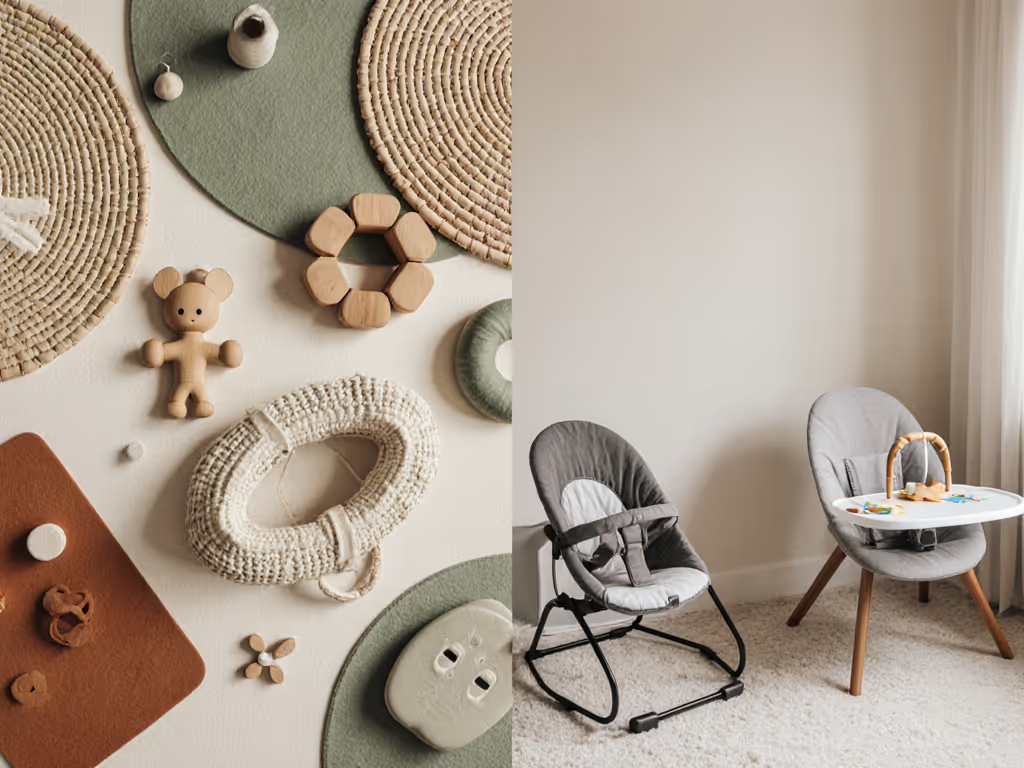
This isn't about labeling any approach "better," researchers emphasize huge overlap in abilities across cultures. Rather, it shows how environmental opportunities influence development. In many traditional societies, infants don't spend hours in specialized equipment. Instead, they're carried close in slings (like China's mei tais or Kenya's kangas), placed on supportive adult laps, or given supervised floor time early on. These practices create natural opportunities for developing strength and balance within daily routines. Modern parents can draw valuable lessons about positioning without feeling pressured to replicate unfamiliar cultural practices.
Translating Traditions to Today's Small Spaces
The research reveals something crucial for apartment-dwelling parents: positioning is a practice, not a product. Instead of searching for the "perfect" bouncer that solves everything, consider how traditional approaches might inform your routine:
- Opportunity over equipment: Many cultures provide frequent, short periods of supervised floor time or lap sitting (something achievable in tiny homes)
- Natural movement: Traditional positioning often incorporates caregiver movement (rocking while walking, gentle bouncing during tasks)
- Minimalist integration: Gear in many cultures serves multiple purposes and stows easily
Step-by-Step Guide to Culturally-Informed Bouncer Use
As someone who turns guidelines into doable habits for tired caregivers, I recommend this evidence-based approach that respects both developmental needs and small-space realities.
Step 1: Understand Your Space Constraints and Baby's Needs
Begin by assessing what your home environment allows. In cultures with limited space (like urban Kenya where researchers observed infants), caregivers often:
- Use multi-purpose seating (the same mat serves as sitting area and play space)
- Prioritize portability (lightweight carriers moved between rooms)
- Schedule short seating periods throughout the day
For your apartment, this might mean:
- Measuring your smallest room to determine maximum bouncer footprint
- Identifying "flow zones" where baby can be safely supervised while you work
- Planning seating sessions around your natural routines (morning coffee, meal prep) For space-constrained setups, see our space-saving bouncer tips to optimize placement and storage.
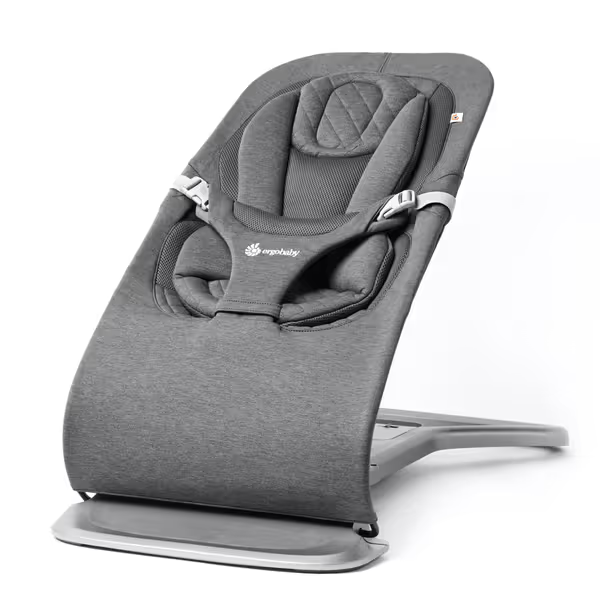
Ergobaby Evolve 3-in-1 Bouncer
Space-saving, multi-stage bouncer for newborns to toddlers, designed for small homes.
$200
Weight8.4 lbs (3.8 kg)
Weight8.4 lbs (3.8 kg)
Pros
3-in-1 design grows with baby from newborn to toddler.
Folds flat and lightweight for easy storage and portability.
Machine-washable, breathable fabric makes cleaning a breeze.
Pediatric orthopedist recommended for ergonomic support.
Cons
Higher price point compared to some bouncers.
Customers love this bouncer seat, finding it comfortable, easy to assemble, and very easy to move from room to room. They appreciate its sturdiness, with one customer noting it held up well to their growing baby, and find it easy to wash and clean, with the cover being machine washable. While some customers find it worth the money, others consider it pretty pricey.
Customers love this bouncer seat, finding it comfortable, easy to assemble, and very easy to move from room to room. They appreciate its sturdiness, with one customer noting it held up well to their growing baby, and find it easy to wash and clean, with the cover being machine washable. While some customers find it worth the money, others consider it pretty pricey.
Step 2: Create Short, Supervised Seating Sessions
Traditional practices often feature brief, intentional positioning periods. Implement this with a timer-based approach:
"Safety lives in routines, not marketing claims or modes."
- Set a visible timer for 15-20 minutes (the natural attention span for young infants)
- Use this time for hands-free moments while staying within arm's reach
- End the session before baby shows fatigue signs (rubbing eyes, fussing)
- Follow with floor time or being held to vary positioning
This mirrors how many cultures rotate between carrying, supervised floor time, and brief seated periods (never long stretches in one position).
Step 3: Position for Development and Safety
Adapt global insights with plain-language caveats: For step-by-step positioning do's and don'ts, see our safe bouncer positioning guide.
- Hip positioning: Follow the "M-position" seen in traditional carriers (hips bent, knees higher than bottom) which the International Hip Dysplasia Institute recognizes as healthy
- Back support: For young infants, use temporary rolled blankets (like many cultures do) rather than permanent inserts that limit movement
- Surface stability: Choose low-profile bouncers that sit firmly on your floor type (avoiding the "wobble risk" common in raised surfaces)
Remember the universal safety boundary: no unattended use. In cultures where babies sit on adult furniture, someone is always nearby, so replicate this by keeping bouncer sessions within your direct supervision zone.
Step 4: Transition Thoughtfully as Baby Grows
Cultures with traditional seating practices naturally phase out support as babies develop:
- When baby starts pushing up on hands (around 4 months), reduce seated time
- Introduce more floor time on playmats as mobility increases
- Never use bouncers once baby can sit unassisted (this creates tipping hazards)
Document your observations in a simple log: For an expert-backed timeline on session length and when to retire the seat, read our bouncer age limits guide.
| Week | Sitting Time | Position Notes | Transitions |
|---|---|---|---|
| 8 | 15 min x 3 | Needs head support | Rolls to side |
| 12 | 20 min x 2 | Holds head steady | Attempts to push up |
Making Global Wisdom Work for Your Home
I once helped a parent who felt guilty about using her bouncer during precious quiet moments, she'd let her newborn nap there because it was the only break she got. We timed a soothing routine together: 15 minutes of supervised bouncer time followed by moving to a flat sleep surface. Short stints, clear time limits, and quick transitions gave her calm without compromising safety. This is why I maintain that safety is a routine you practice, not a feature you buy.
Cultural practices teach us that infant positioning works best when integrated into daily life (not as isolated equipment use). Your actionable next step: Set up a 15-minute timer today and observe your baby's positioning needs without equipment. Note where they're most engaged and comfortable. Then, use that insight to create brief, intentional bouncer sessions that complement, not replace, natural movement opportunities. When you approach seating as a practice rather than a purchase, you're building the safety routines that matter most.
Related Articles
Bouncer Basics, Benefits & Alternatives
Infant Activity Bouncer Safety: Your Routine Guide
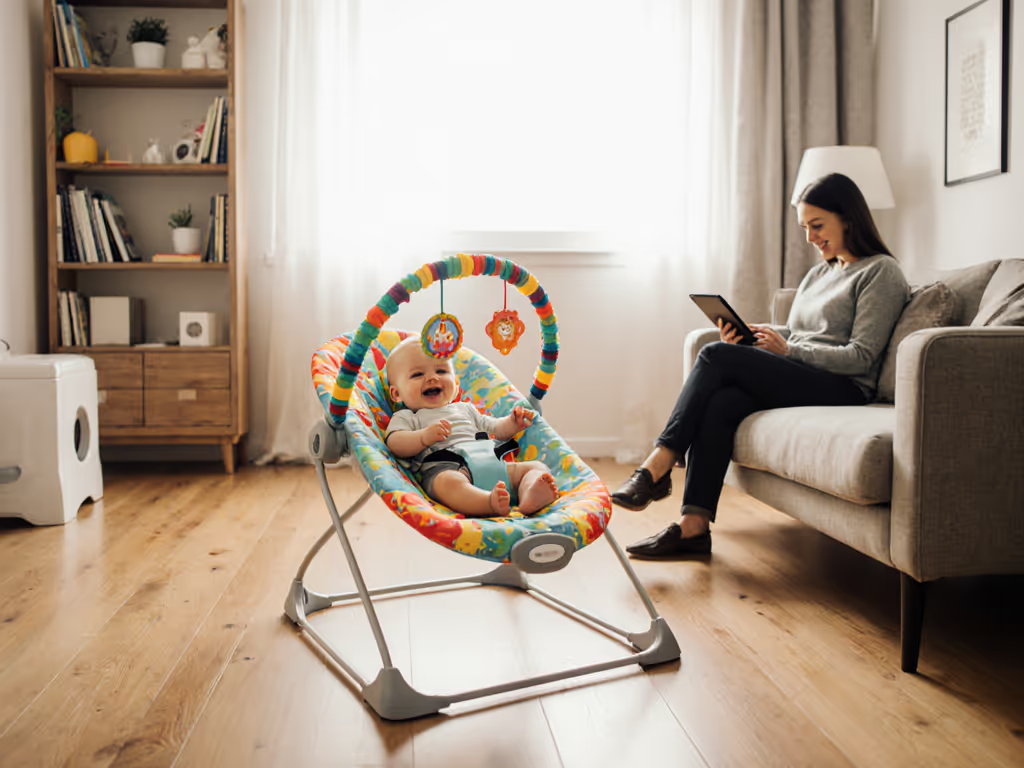
Learn evidence-based routines to use an infant bouncer safely in small spaces - hard-floor placement, snug straps, 20-minute supervised sessions, and stopping when baby starts to sit or push up. Keep it off beds, sofas, and counters and never for sleep to reduce suffocation and fall risks.
Bouncer Basics, Benefits & Alternatives
Infant Activity Bouncer Guide: Space-Saving & Safe
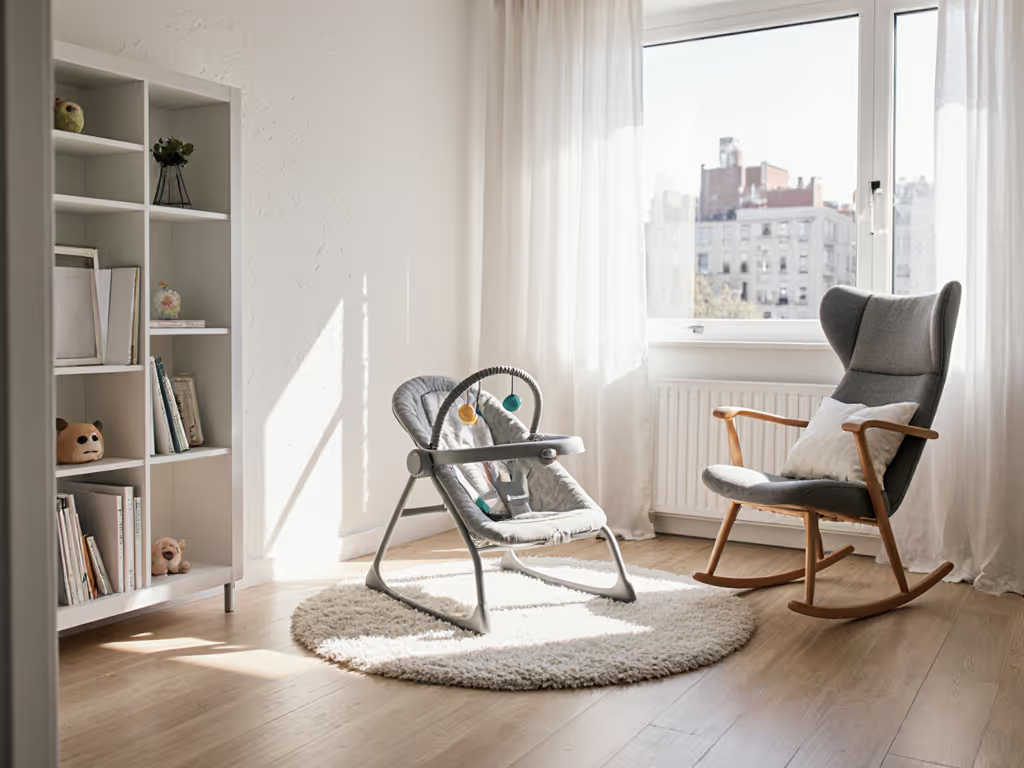
Choose a compact, quiet, easy-to-clean bouncer that truly fits tight spaces and know where to place it. Integrate it safely with floor-only use, snug restraints, milestone-based stop dates, and a simple 5-minute checklist.
Bouncer Basics, Benefits & Alternatives
Infant Activity Bouncer: Developmental Benefits, Small Footprint
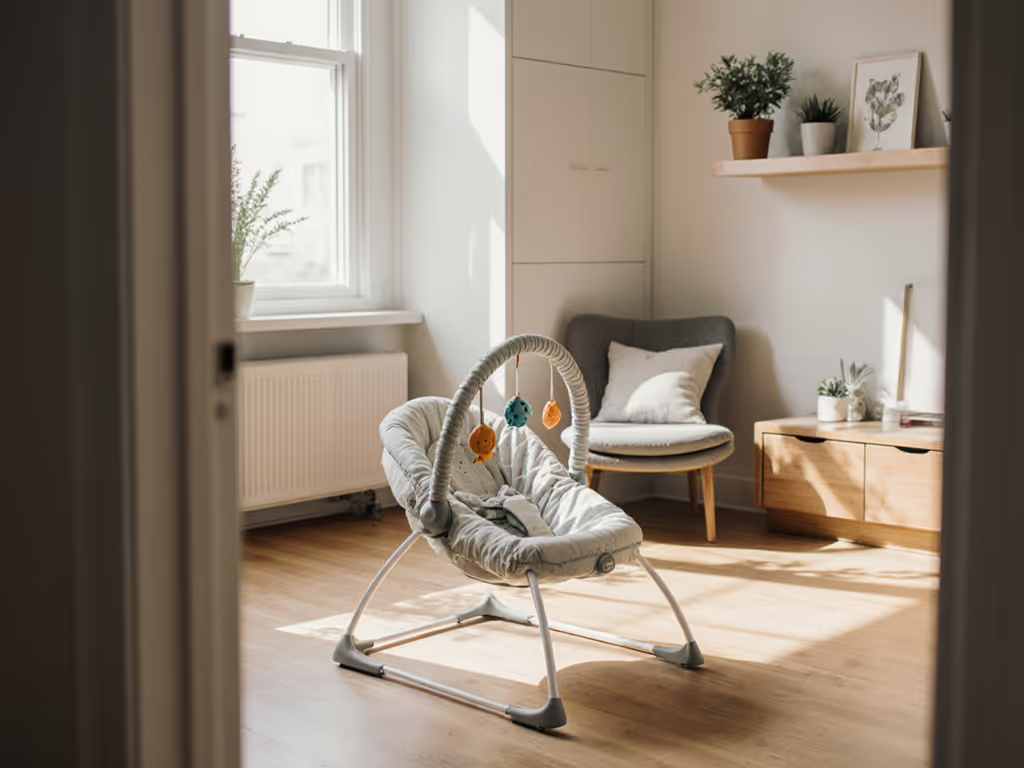
Get clear on bouncers’ real, time‑bound developmental benefits and safe usage limits. Use small‑space metrics - compact footprint, under 40 dB noise, and under 90‑second cleaning - to choose a model that won’t disrupt sleep or flow, or skip it entirely.